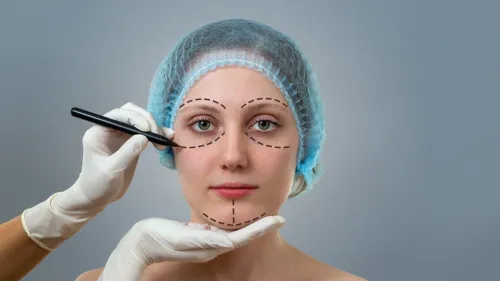
Facial appearance changes naturally with age. Volume distribution may shift, certain contours can become less defined and lines may become more noticeable. Fillers are injectable treatments used in aesthetic medicine to address selected facial concerns without surgery.
Their purpose is not necessarily to make a face look dramatically different. Thoughtful treatment often focuses on maintaining proportion while making carefully selected changes.
What Facial Fillers Can Address
Depending on the product, treatment area and individual anatomy, fillers may be considered for concerns involving facial volume and contour.
Common treatment discussions may involve:
- Cheek volume
- Chin projection
- Jawline definition
- Selected facial folds
- Lip shape and volume
- Certain areas of age-related volume loss
Not every facial line requires filler. Dynamic lines caused primarily by repeated muscle movement may require a different approach.
Facial Anatomy Matters
Injectable treatments can appear simple because they do not involve traditional surgery, but the face contains important blood vessels, nerves and other anatomical structures.
The choice of injection depth, amount and location should therefore be based on a detailed understanding of facial anatomy.
This is also why selecting treatment based solely on the number of syringes can be misleading. One person may need subtle correction in a single area, while another may benefit from a broader assessment of facial balance.
More Product Does Not Always Mean a Better Result
Overcorrection can alter natural facial proportions.
A conservative treatment philosophy may involve evaluating the face from different angles and considering how individual features relate to each other. Improving chin projection, for example, can affect the perceived balance of the nose and lower face.
Patients seeking fillers in Jaipur increasingly have access to many aesthetic options, making careful provider selection and realistic treatment planning particularly important.
Temporary Results Can Be an Advantage
Many commonly used facial fillers are not permanent. Duration can vary according to the material, treatment area, individual metabolism and other factors.
Temporary results mean maintenance may eventually be needed, but they also allow aesthetic plans to evolve as the face changes over time.
Patients should ask which product is being proposed, why it is suitable for the treatment area and what duration can reasonably be expected.
Know the Possible Side Effects
Swelling, tenderness, redness and bruising may occur after injectable treatment. Other complications are less common but can be more serious.
Patients should receive clear information about expected aftercare and warning signs requiring prompt medical attention.
It is also important to disclose previous facial procedures, medicines, allergies and relevant health information before treatment.
Aesthetic Planning Should Be Individual
A photograph from social media can help explain a preference, but it should not become a template for reproducing another person's facial structure.
Facial shape, bone structure, skin quality and soft-tissue distribution are unique.
At Dr. Nakul Somani's practice in Jaipur, injectable aesthetic treatment can be planned after assessing facial anatomy and the particular concern the patient wants to address.
For individuals across Rajasthan exploring nonsurgical facial enhancement, understanding the role and limitations of fillers is an important first step. The most appropriate treatment is not necessarily the one that produces the largest visible change. In many cases, preserving natural expression and facial harmony is a more useful objective than pursuing an exaggerated result.
Keywords