A consultation becomes more useful when you can describe the exact feature you want changed instead of asking for a smaller or better-looking nose. By the end, you should know which measurements, photographs, breathing concerns, surgical options and personal constraints to raise before agreeing to a plan.
Key takeaways
- Describe the exact feature and direction of change you want.
- Compare your nose from front, profile, oblique and base views.
- Ask how skin thickness and cartilage affect the planned shape.
- Discuss breathing, medical history, timing and recovery before choosing surgery.
Describe the nose features you want changed, not just the result you want
Say which feature you want changed and in what direction, rather than asking for a “better” or “more attractive” nose. A clear request connects nose shape to a specific concern, such as wanting less width from the front, a straighter profile, or a smaller-looking tip without making breathing worse.
Use concrete terms during the consultation:
- Dorsal hump: reduce it, straighten it, or keep some of it for a natural profile.
- Nasal bridge width: narrow the upper bridge, soften its appearance, or preserve its current width.
- Tip projection: bring the tip closer to the face or make it more defined.
- Tip rotation: raise or lower the tip, while discussing how this changes nostril visibility.
- Nostril width and alar flare: narrow the base or reduce outward flare.
- Columella show: change how much tissue appears between the nostrils.
- Asymmetry or deviation: identify whether the nose bends, the nostrils differ, or one side looks wider.
Bring photographs that show the preferred feature, but explain what you want copied rather than presenting a celebrity’s entire nose as the target.
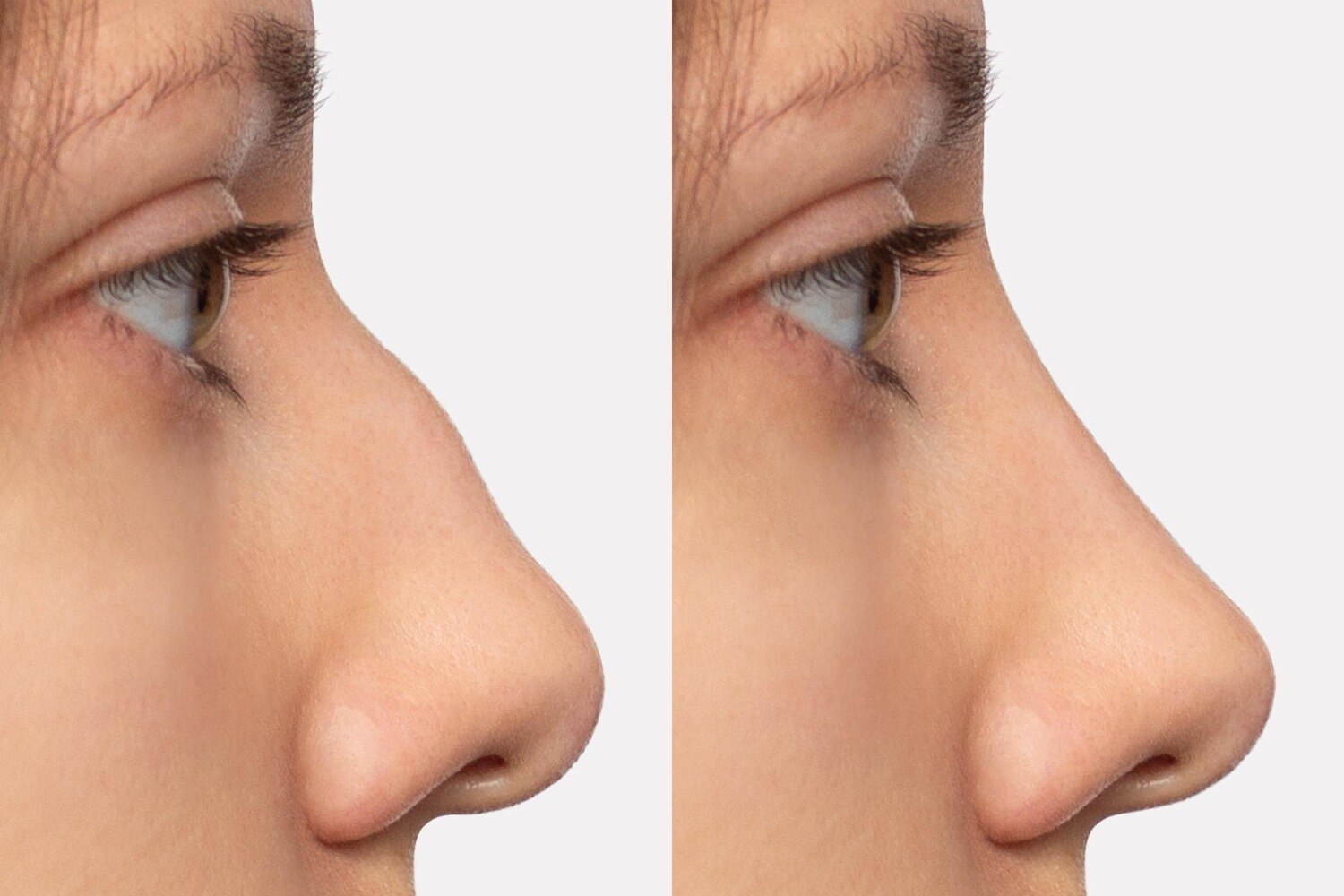
Ask to assess your request from frontal, profile, oblique, and basal views because reducing a dorsal hump can make the tip look more prominent, while shortening or rotating the tip can alter the apparent upper lip and nostrils. Discuss nose proportion in relation to your forehead, cheeks, lips, and chin.
Computer images clarify direction, not guarantee the final result.
Use four views to test proportion across the whole face
A proposed nose shape suits you only when it balances the whole face, not when it looks attractive in one photograph. Ask for standardized photographs—frontal, profile, oblique and basal—taken at the same distance, eye level and neutral expression.
| View | What to assess | Facial relationship |
|---|---|---|
| Frontal | Bridge width, tip symmetry, nostril width, alar flare and deviation | Compare the nose with inner-eye spacing, cheek width and the facial midline |
| Profile | Dorsal hump, bridge-to-tip line, tip projection and tip rotation | Assess the forehead, upper lip, chin and neck; a weak chin can make the nose appear larger |
| Oblique | How the bridge, tip and alar margins transition in three dimensions | Check whether the proposed change remains balanced between front and profile |
| Basal | Columella show, nostril shape, nostril width and alar flare | Compare the nasal base with the upper lip and width of the lower face |
Reducing a dorsal hump can make the tip look more prominent without changing the tip itself. Shortening or rotating the tip can alter the apparent length of the nose, upper lip and nostrils, so review these changes together.
Use computer imaging to discuss direction, not to promise an outcome. Skin thickness, cartilage memory, scar formation and swelling affect the result, and tip swelling can last for months after bridge swelling settles.
Match the requested shape to skin, cartilage and surgical access
Your requested nose shape is limited by skin thickness, cartilage strength and the amount of support available inside the nose. Ask how each factor affects the result before treating a computer-generated image as a promise.
- Thick, sebaceous skin can conceal fine nasal tip refinement and prolong swelling, so an extremely sharp or small tip may not appear realistic.
- Thin skin can reveal cartilage edges, asymmetry and minor irregularities, making aggressive reshaping risky.
- Weak, crooked or previously altered cartilage can limit tip projection, rotation and nostril symmetry.
The approach depends on the structural work required, not on one technique being universally better.
| Option | What it means | When it applies |
|---|---|---|
| Open rhinoplasty | Uses a trans-columellar incision and lifts the skin for wider exposure | Complex tip reshaping, major structural changes or revision surgery |
| Closed rhinoplasty | Uses incisions inside the nostrils, avoiding an external columellar incision | Selected changes that can be completed with less exposure |
Discuss columella show separately: changing tip support or rotation can alter how much of the columella is visible and can affect nostril shape. Your surgeon should also examine any previous rhinoplasty, septoplasty, filler treatment, fracture or trauma because these can reduce available septal cartilage.
Ear cartilage, rib cartilage or donated cartilage may be considered when stronger graft material is needed. Computer images help define a target, but cartilage memory, scar formation, swelling and healing determine how closely you reach it.
Separate a cosmetic change from an obstruction that needs functional treatment
Discuss functional treatment in the initial rhinoplasty consultation whenever you have persistent nasal blockage, not after cosmetic planning is complete. A cosmetic rhinoplasty changes external shape; it does not reliably correct airflow problems caused by a deviated septum, turbinate enlargement or nasal valve narrowing.
Raise these concerns before agreeing to an operative plan:
- A blocked side that stays blocked, especially after exercise, lying down or during sleep
- Mouth breathing, snoring, reduced exercise tolerance or repeated reliance on decongestant sprays
- Previous nasal trauma, fracture, septoplasty, rhinoplasty or filler treatment
- A nostril that collapses inward when you inhale
Ask whether the proposed operation is cosmetic rhinoplasty, septoplasty, turbinate reduction, nasal valve repair or a combined procedure. When appearance and breathing require structural work together, the surgeon may call it a functional septorhinoplasty.
The surgeon should examine the septum, turbinates and nasal valves inside the nose. Nasal endoscopy may be appropriate when obstruction is significant, the nose was previously injured or you have had earlier surgery. This assessment identifies the cause rather than assuming that reducing a hump or narrowing the bridge will improve airflow.
The distinction also affects records, consent, recovery expectations and insurance rules. Ask which symptoms the functional procedure is intended to address, what change cosmetic surgery alone would leave untreated, and how preserving or reinforcing the nasal framework will affect the shape you want.
Check your safety, timing and recovery expectations before choosing a plan
Do not choose a surgical plan until your medical history, breathing, nicotine use and recovery calendar have been reviewed. Report previous rhinoplasty, septoplasty, nasal trauma, fractures, fillers, allergies, bleeding disorders, medicines and sleep-apnoea symptoms. A surgeon may need an internal examination or nasal endoscopy, especially after trauma or prior surgery.
Ask these questions before consenting:
- Is this cosmetic rhinoplasty, functional septorhinoplasty, or a combined procedure?
- Will you assess my septum, turbinates and nasal valves, not only the external shape?
- If septal cartilage is insufficient, would ear or rib cartilage grafts be needed?
- Which risks apply to my anatomy, including persistent blockage, valve collapse, asymmetry or revision surgery?
- What are the restrictions on exercise, glasses, work and travel?
| Plan | Main purpose | What to clarify |
|---|---|---|
| Cosmetic rhinoplasty | Changes external shape and proportion | It may not correct every cause of blockage |
| Functional septorhinoplasty | Improves structure and nasal airflow | Document obstruction and discuss insurance rules |
| Combined procedure | Addresses appearance and breathing together | Confirm which structural repairs are included |
Stop smoking and vaping, disclose nicotine replacement and recreational drug use, and follow the surgeon’s required nicotine abstinence period before and after surgery. Schedule recovery away from important events: swelling and bruising improve gradually, while final definition can take much longer.
Rhinoplasty usually waits until facial growth is substantially complete; earlier surgery requires an individualized medical reason. At a consultation with Dr Nakul Somani, use these questions to test whether the proposed operation fits your health and timing.
Related service
Facial Aesthetics Rhinoplasty Types of Rhinoplasty There are many types of Nose Surgery (Rhinoplasty). One will seek the surgeon’s help if they need a kind of rhinoplasty. |
Frequently asked questions
What should you ask for instead of a “better” nose?
Name the feature you want changed and the direction of change, such as less width from the front, a straighter profile or a smaller-looking tip.
Which views help assess nose proportion?
Review front, profile, oblique and base views to compare the nose with the rest of your face.
How do skin and cartilage affect rhinoplasty planning?
Skin thickness, cartilage strength and the surgical access needed can limit how sharply or precisely the nose can be reshaped.
How can you tell whether breathing needs functional treatment?
Tell your surgeon about congestion, difficulty breathing, blockage during exercise and previous nasal injuries so functional problems are assessed alongside appearance.
What should you check before scheduling rhinoplasty?
Review your health history, medications, smoking status, timing, time away from work and the expected swelling and recovery period.