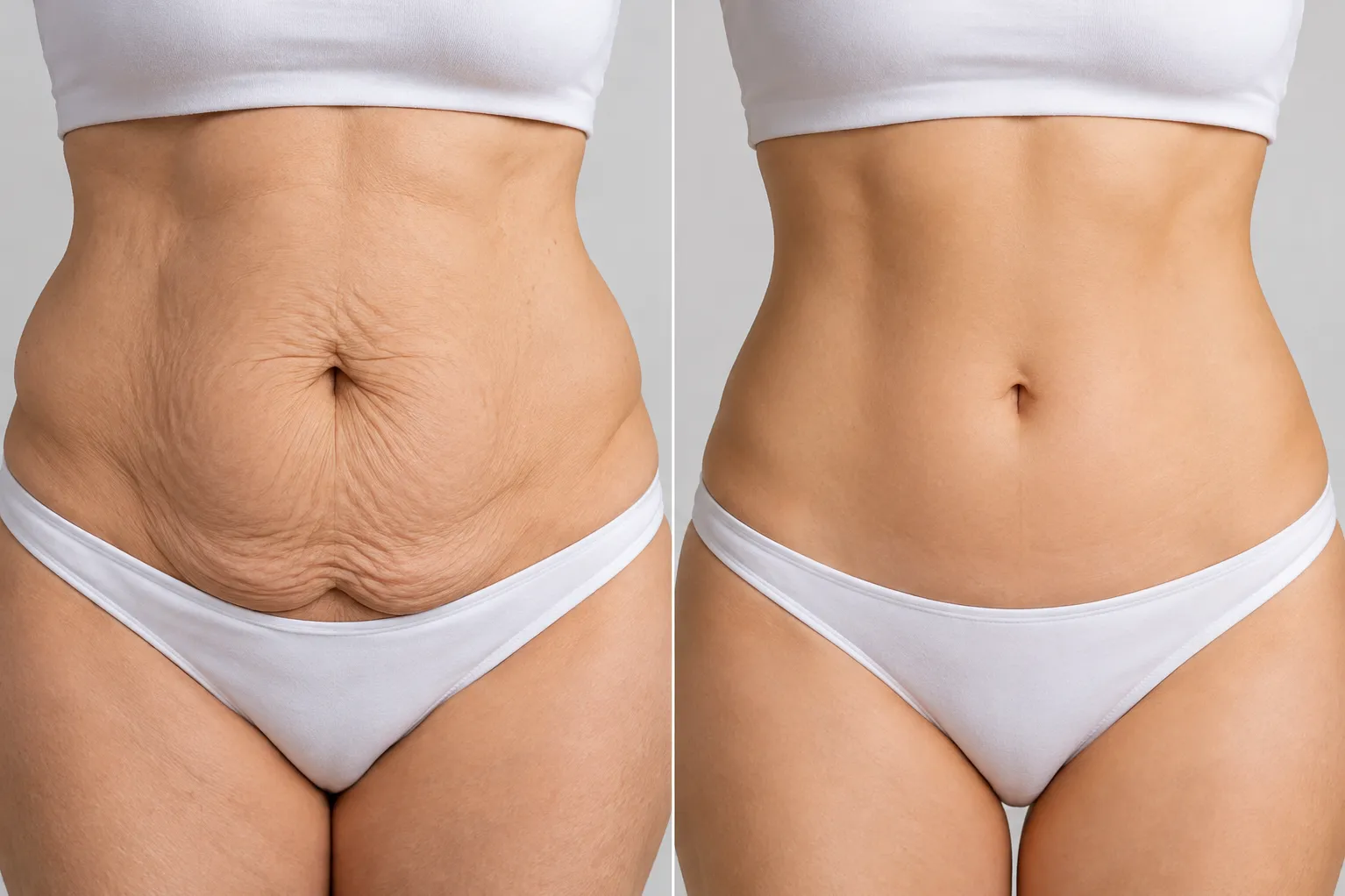
A flatter abdomen is not always achieved simply by removing fat. Pregnancy, significant weight changes and ageing can affect abdominal skin and underlying tissues in ways that exercise and isolated fat reduction cannot fully address.
A tummy tuck, medically known as abdominoplasty, may be considered when excess skin and abdominal laxity are important parts of the concern.
Look Beyond Abdominal Fat
The appearance of the abdomen can be influenced by several components:
- Subcutaneous fat
- Loose or stretched skin
- Abdominal wall laxity
- Previous surgical scars
- Skin quality
- Overall body proportions
Identifying which component is responsible for the concern is essential before choosing a body-contouring procedure.
If excess fat is the primary issue and the skin has suitable elasticity, liposuction may sometimes be considered. If substantial loose skin is present, removing fat alone may not produce the desired contour.
Pregnancy Can Change More Than Skin
During pregnancy, the abdominal wall and skin expand considerably. After childbirth, some people experience persistent laxity despite returning to a stable body weight.
This is why abdominal contouring after pregnancy cannot be planned solely by measuring body fat.
The surgeon needs to evaluate the skin envelope, abdominal wall, fat distribution and previous scars before discussing the most appropriate procedure.
What Happens During a Tummy Tuck
The exact technique depends on individual anatomy and the extent of correction required.
In general, abdominoplasty involves removing selected excess skin and reshaping the abdominal contour. Additional steps may be considered depending on the patient's condition and surgical plan.
The procedure results in a surgical scar. Its expected position and length should be discussed clearly during consultation.
Recovery Requires Preparation
Compared with smaller cosmetic procedures, tummy tuck recovery can require more planning.
Before surgery, patients may need to organise:
- Time away from work
- Help with household responsibilities
- Assistance with young children
- Comfortable clothing
- Transport after surgery
- Follow-up appointments
- Appropriate sleeping arrangements
Physical activity is gradually resumed according to medical advice. Trying to return to strenuous exercise too quickly may interfere with recovery.
Who Should Consider Delaying Surgery
Timing matters.
Someone planning another pregnancy in the near future may wish to discuss whether surgery should be postponed because pregnancy can stretch the abdominal tissues again.
Major planned weight loss is another consideration. Achieving a reasonably stable weight before body-contouring surgery can make planning more meaningful.
Smoking and certain health conditions may also affect surgical risk and wound healing and should be discussed openly.
Choosing Between Procedures
Patients searching for a tummy tuck in Jaipur sometimes arrive expecting liposuction because they associate abdominal contouring mainly with fat removal.
A physical assessment may reveal that skin laxity is a significant part of the concern.
Dr. Nakul Somani evaluates abdominal contouring patients in Jaipur by considering skin, fat distribution, abdominal laxity, general health and the individual's goals before discussing surgical options.
People travelling from other parts of Rajasthan should also factor postoperative follow-up into their plans rather than considering only the surgery date.
A tummy tuck can be appropriate for selected patients, but it is not simply a more extensive version of liposuction. The procedures address different anatomical problems. Understanding whether the main concern involves fat, skin, abdominal laxity or a combination of these factors is the key to choosing a suitable treatment approach.
Keywords