Hollow cheeks, sunken temples, a flattened midface, thin lips, and a less defined chin or jaw can change the balance of the whole face. By the end, you will understand where filler adds support, how product choices differ, what the procedure involves, and which warning signs require prompt medical attention.
Key takeaways
- Volume loss can affect cheeks, temples, lips, under-eyes, and jawline.
- Placement determines whether filler adds projection, support, or contour definition.
- Hyaluronic acid, calcium hydroxylapatite, and poly-L-lactic acid suit different goals.
- Seek urgent medical help for severe pain, skin color changes, or vision symptoms.
What facial volume loss looks like and what filler changes
Facial volume loss is a reduction in the fat, soft-tissue support, or structural projection that gives your face its shape. It can appear as:
- hollow cheeks or a flattened midface
- sunken temples and deeper tear troughs
- thinner lips
- reduced definition at the chin and jaw
- stronger shadows beside the nose, mouth, or lower eyelids
Filler does not simply inflate every hollow. A clinician may place a small amount in the cheek or deeper midface to restore support, soften under-eye shadowing, and improve the transition toward the nose and mouth. Chin or jawline placement can sharpen profile definition, while temple treatment can reduce a sunken outline.
Filler in the nasolabial fold, marionette line, or lips targets those areas directly, but direct filling is not always the best solution. Too much filler in a fold can create a heavy ridge while leaving the underlying contour unchanged.
Strategic placement can improve projection, apparent lift, and facial balance without making the whole face look larger. Filler replaces or supports volume; Botox reduces targeted muscle activity. Neither approach significantly tightens markedly loose skin, heavy eyelids, or substantial jowling, which may require a surgical assessment instead.
How placement changes projection, lift, and facial balance
Injection depth and site determine whether filler creates forward projection, soft support, or visible bulk. Deep cheek filler placed near the bone can strengthen the midface and create a subtle lifting effect in nearby shadows. More superficial placement changes the skin’s contour but carries a greater risk of visible irregularity.
The same amount does not work equally well everywhere:
- Temple filler replaces hollowing at the side of the forehead; placing too much can make the face look heavy.
- Tear trough filler requires conservative placement in a thin-skinned, mobile area; excess product can create puffiness or a bluish cast.
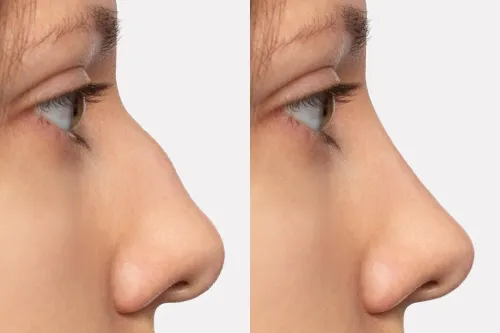
- Chin projection comes from deep, structurally placed filler, which can improve the side profile and lower-face balance.
- Jawline filler follows the mandibular border to sharpen definition, but it cannot remove loose skin or substantial jowling.
Supporting the cheek or lateral midface can soften shadows beside the nose and mouth without filling those lines directly. Adding filler into every fold instead can create a swollen appearance while leaving the underlying imbalance unchanged. Filler also does not truly tighten lax skin; surgery may suit marked eyelid, jowl, or neck excess better.
| Filler | Adds or replaces volume beneath the skin, changing projection and contour | Results depend on product, depth, movement, and site |
|---|---|---|
| Botox | Reduces activity in selected muscles, softening movement-related lines | It does not replace lost volume or create chin projection |
A filler can migrate, particularly in mobile areas such as the lips, producing lumps, swelling, or an unnatural border.
Choosing between hyaluronic acid, calcium hydroxylapatite, and poly-L-lactic acid
A hyaluronic acid filler is often chosen when you want adjustable volume and a clinician needs flexibility across areas such as the lips, cheeks, chin, or tear troughs. Calcium hydroxylapatite provides firmer structural support for cheek, chin, and jawline contouring, while poly-L-lactic acid works gradually by stimulating collagen rather than creating its full effect immediately.
| Option | Main use and feel | Persistence and limits |
|---|---|---|
| Hyaluronic acid filler | Flexible volume for lips, cheeks, chin, and some under-eye treatments; products range from soft to firm | Temporary; FDA patient information describes fillers lasting about 6 months or longer, and some HA products or sites last 1–2 years. Many HA gels can be treated with hyaluronidase, but correction is not guaranteed |
| Calcium hydroxylapatite | Denser support for projection and definition, especially cheeks, chin, and jawline | Often lasts around 1 year or longer; it is not easily dissolved and is a poor choice for some thin-skinned or highly mobile areas |
| Poly-L-lactic acid | Gradual collagen stimulation for diffuse volume loss; requires staged treatment rather than instant shaping | Builds over weeks to months and can persist 1–2 years or more; lumps or nodules are possible if placement or aftercare is poor |
Ask which exact product, batch number, expiry date, and anatomical indication apply to you. Confirm whether the proposed use is approved by the local regulator or off-label, who will inject it, and how complications will be managed.
More product or a cannula does not reliably prevent migration, which can cause swelling, lumps, or an unnatural contour.
What happens during a filler consultation and injection session
Your filler consultation starts with your goals, medical history, previous injections, allergies, medicines, and plans for dental work or surgery. During the facial assessment, the clinician examines skin thickness, asymmetry, muscle movement, bone structure, shadows, and volume loss at rest and while you smile. Standardised photographs help compare the result later.
Injection sites follow the contour the clinician is trying to change, not a fixed template. Cheek projection, chin length, jawline definition, lips, temples, tear troughs, and folds need different depths and product characteristics. The same number of millilitres can create subtle support in the cheek but an overfilled appearance in a mobile, thin-skinned area.
The treatment plan should specify:
- The product’s brand, material, lot number, expiry date, intended area, and whether the proposed use is off-label.
- The estimated amount and sequence, including whether the clinician will reassess before adding more.
- The technique, including needle versus cannula, injection depth, and why that instrument suits each area.
- The response plan for complications, including access to urgent assessment and hyaluronidase when a hyaluronic-acid filler causes a vascular occlusion.
A blunt cannula can reduce punctures and bruising in selected areas, but it cannot prevent vascular occlusion or blindness; both cannulas and needles have caused vascular complications. Ask how the clinician will recognise severe pain, blanching, mottled skin, or delayed capillary refill, because these signs require urgent treatment rather than routine observation.
Dr Nakul Somani should be able to explain why each proposed site and product fits your anatomy, instead of treating every concern with the same filler or volume. Migration, lumps, persistent swelling, and unnatural contours remain possible, especially around mobile areas such as the lips.
Related service
Facial Aesthetics Get a Rejuvenated Appearance with Botox and Fillers at Dr Nakul Somani's Clinic Botox One of the most effective and less evasive techniques to do... View service → |
What to expect after treatment and when to seek help
Judge the result after filler swelling and bruising have eased, not on the day of injection. Early edema, tenderness, firmness, and asymmetry can change over several days or weeks, so compare photographs taken in the same lighting and attend the scheduled review before deciding that more product is needed.
| Finding | What it usually means | What to do |
|---|---|---|
| Mild swelling, bruising, tenderness, or firmness | Early tissue response | Use only the aftercare advised; monitor the trend |
| Persistent lumps, increasing swelling, or an unnatural contour | Possible filler migration, infection, or delayed inflammatory nodules | Contact the treating clinician for assessment |
| Severe pain, blanching, grey or mottled skin, or slow capillary refill | Possible vascular occlusion | Seek urgent medical assessment immediately |
| Vision change, severe headache, weakness, numbness, or difficulty speaking | A potentially serious vascular or neurologic event | Seek emergency care now |
Pain that worsens instead of settling, skin color change, fever, drainage, or rapidly increasing swelling is not routine recovery. Do not massage a lump or inject more filler to correct an uneven result unless a qualified clinician examines you.
Delayed inflammatory nodules can appear weeks to years after treatment. Treatment depends on the cause and material; options include observation, antibiotics, corticosteroids, drainage, or hyaluronidase for hyaluronic-acid filler. Hyaluronidase can dissolve HA, but it cannot instantly reverse every filler complication, including tissue injury or infection.
Frequently asked questions
What does facial volume loss look like?
It can appear as flatter cheeks, hollow temples, deeper folds, thinner lips, under-eye hollows, or reduced jawline definition.
How does filler placement change facial contours?
Placement controls whether filler adds projection to a flat area, supports nearby tissue, or defines a border such as the jawline or cheek.
How do hyaluronic acid, calcium hydroxylapatite, and poly-L-lactic acid differ?
Hyaluronic acid provides immediate, adjustable volume; calcium hydroxylapatite adds structure and stimulates collagen; poly-L-lactic acid builds results gradually through collagen production.
When should you seek help after facial filler?
Contact your injector promptly for worsening pain, pale or dusky skin, marked swelling, or signs of infection. Seek emergency care for vision changes or neurological symptoms.