Blackheads, painful nodules, chest acne and leftover dark marks are not the same treatment problem. A useful assessment identifies the lesion type, measures the disease burden and checks for conditions or medicines that could change the diagnosis, so you can choose proportionate care instead of layering products at random.
Key takeaways
- Deep, painful, widespread, or scarring breakouts need earlier medical assessment.
- Check whether bumps are acne before starting acne medication.
- Match treatment to clogged pores, inflammation, or both.
- Treat active acne first, then address marks and permanent scars separately.
Start With the Breakout Pattern, Not the Label “Bad Acne”
The starting treatment depends on lesion type and acne severity: how widespread, deep, painful, recurrent, or likely to scar the breakouts are—not on whether you call them “bad acne.” A few blocked pores need a different starting point from widespread, tender lesions.
- Comedonal acne: Blackheads and whiteheads reflect blocked pores. A topical retinoid is usually the starting treatment because it helps clear existing comedones and prevent new ones.
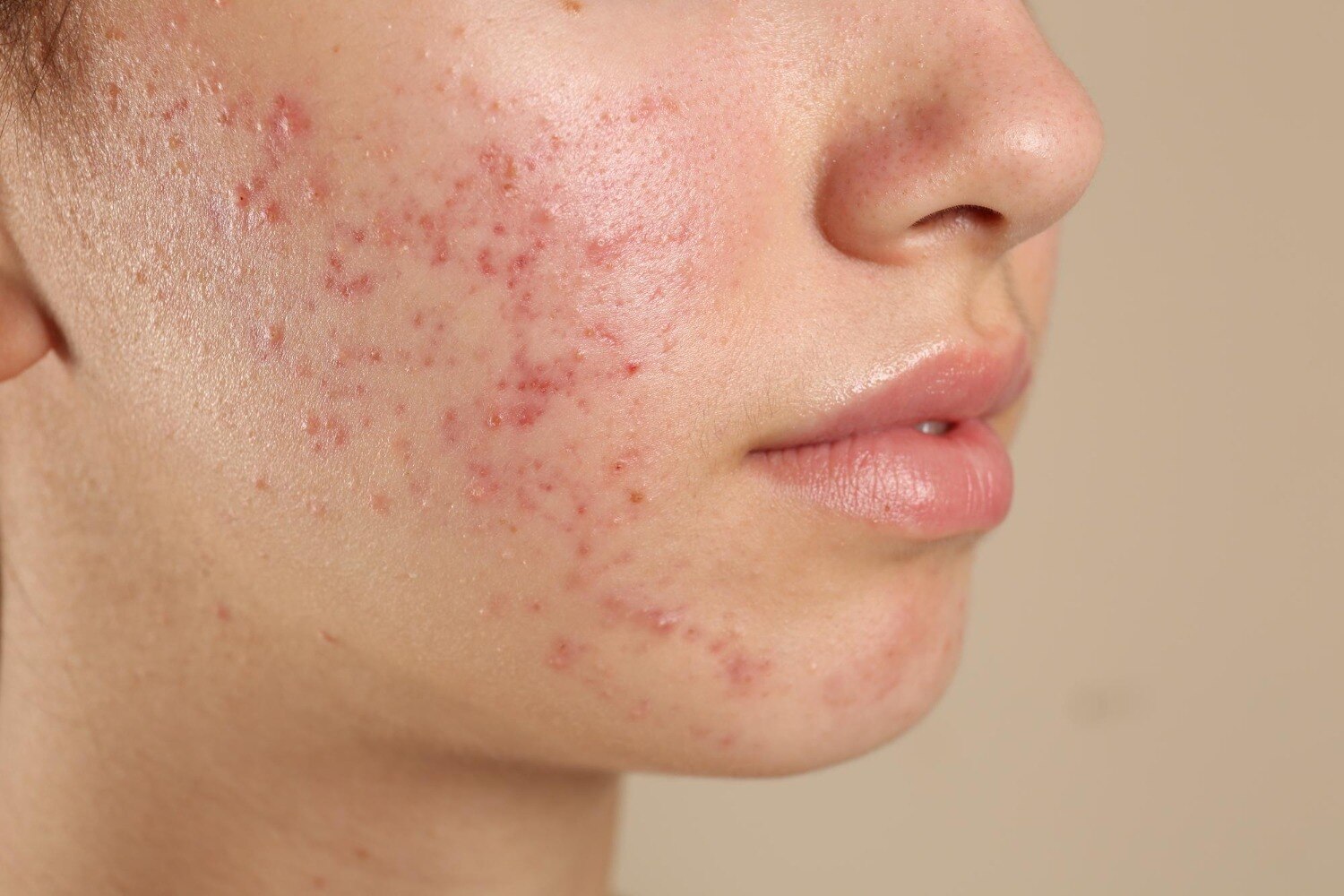
- Papules and pustules: These red, raised or pus-filled lesions indicate inflammatory acne. Benzoyl peroxide, often paired with another topical treatment, targets inflammation and acne-associated bacteria.
- Nodules and cysts: Deep, painful lumps carry a higher scarring risk. Extensive or persistent disease may require prescription oral treatment; an intralesional corticosteroid injection can rapidly reduce one especially painful lesion but will not treat widespread acne.
- Marks or scars after acne: Brown or red marks and permanent depressed or raised scars are not active lesions. Control new breakouts first, then assess separate treatment for the remaining changes.
Lesion count alone does not define severity. Truncal acne, repeated flares, pain, poor response to a proper topical trial, existing scars, or a high risk of scarring all strengthen the case for medical assessment.
A sudden, uniform acne-like eruption after starting a corticosteroid, androgen, or anticonvulsant also needs a medication review, especially when blackheads and whiteheads are absent.
Confirm That the Bumps Are Acne
A clinician looks for the pattern of lesions, not just redness or “pimples.” Acne usually combines open comedones (blackheads), closed comedones (whiteheads), papules, pustules, or deeper nodules, and it commonly affects the face, chest, shoulders, or back.
The history matters too: ask when it began, which products or medicines preceded it, whether the bumps itch or hurt, and whether they recur in the same areas.
- Folliculitis versus acne: Folliculitis produces many similar-looking, itchy or tender bumps centred on hairs, often after shaving, sweating, friction, or occlusive clothing. Acne is more likely when comedones and mixed lesion types are present.
- Rosacea: Persistent central facial redness, flushing, visible small blood vessels, burning, and papules around the cheeks or nose point away from acne. Comedones are usually absent.
- Perioral dermatitis: Small, closely grouped bumps with burning or dryness appear around the mouth, nose, or eyes, often leaving a narrow clear margin beside the lips. Steroid creams can worsen it.
- Keratosis pilaris: Rough, dry, stable follicular bumps on the upper arms, thighs, or cheeks lack the blackheads, pustules, and deep inflammation typical of acne.
- Skincare irritation: A new cleanser, retinoid, exfoliating acid, or cosmetic can cause diffuse redness, stinging, scaling, or itching in the application area rather than distinct acne lesions.
If the pattern is unclear, stop newly added irritants and arrange an examination before escalating acne medication.
Match Topical Treatment to the Main Problem
Blackheads and whiteheads point to blocked follicles, while red papules and pustules signal inflammation. Choose the active ingredient for the dominant problem, not simply the number of spots; a few deep, painful lesions can need a different plan from many shallow comedones.
- Topical retinoids, such as adapalene or tretinoin, loosen existing plugs and reduce new comedones. Apply a thin layer across the acne-prone area, not just to visible blackheads.
- Benzoyl peroxide reduces Cutibacterium acnes and inflammation, making it useful for papules and pustules. It can bleach fabric and irritate skin, so start with a lower strength or alternate-day use.
- Topical antibiotics reduce inflammatory acne but should not be used alone. Pair them with benzoyl peroxide to limit antibiotic resistance, then review the plan at about 12 weeks.
- Azelaic acid for dark marks is useful when active acne occurs alongside post-inflammatory hyperpigmentation. It also helps calm mild inflammatory spots without adding an antibiotic.
Mild-to-moderate acne often responds better to complementary treatment than to one product alone, such as a retinoid plus benzoyl peroxide or adapalene plus benzoyl peroxide. Short-contact application or alternate-day use can reduce early irritation.
If you can become pregnant, discuss retinoids before treatment; clinicians may consider benzoyl peroxide or azelaic acid instead, depending on the case. Continue an effective retinoid-based routine for maintenance after improvement, because stopping can allow blocked pores and inflammation to return.
Know When Combination or Oral Treatment Is Proportionate
One topical is not enough when mild-to-moderate acne contains both blocked pores and inflamed spots. Combination acne treatment, such as a topical retinoid with benzoyl peroxide or fixed adapalene–benzoyl peroxide, targets plugging and inflammation; topical antibiotic monotherapy is avoided because it encourages resistant Cutibacterium acnes.
Escalate treatment when the breakout pattern justifies it:
- Add oral antibiotics for moderate-to-severe inflammatory acne, extensive truncal acne, or acne that remains active after an adequate topical trial. Pair them with benzoyl peroxide, review progress at about 12 weeks, and do not continue beyond six months unless there is a specific reason.
- Discuss isotretinoin for severe nodules, scarring acne, treatment-resistant disease, or major psychological distress—not for occasional pimples. A specialist must oversee prescribing, safety checks, and pregnancy-prevention requirements.
- Consider hormonal acne treatment for persistent lower-face or jawline acne in adult women. Combined oral contraceptives or spironolactone require medical screening, follow-up, and time to work; neither is an instant spot treatment.
Pregnancy planning changes the shortlist before treatment starts. Avoid topical retinoids, oral tetracycline antibiotics, and isotretinoin during pregnancy; avoid isotretinoin while planning pregnancy as well. Ask about benzoyl peroxide or azelaic acid instead, based on your acne and medical history. If pregnancy is possible, tell the prescriber before choosing antibiotics, spironolactone, or contraception-based treatment.
Separate Active Acne From Marks and Permanent Scars
Painful nodules, repeated flare-ups, or acne that is leaving indentations are reasons to seek a dermatologist. Do not wait for permanent texture changes before asking for help.
When to see a dermatologist:
- Breakouts persist despite a consistent topical routine.
- Acne affects your chest or back extensively.
- Lesions are deep, tender, or rapidly recurring.
- Dark marks or texture changes appear after each flare.
- The eruption began after a new medicine or supplement.
A clinician such as Dr Nakul Somani can check whether the problem is active acne, a drug-related acneiform eruption, or a scar that needs a different plan. Treating a scar as if it were a fresh breakout wastes time.
Red acne marks and post-inflammatory hyperpigmentation are colour changes, not permanent depressions. Once new lesions are controlled, treatment can shift toward pigment control with options such as azelaic acid, alongside daily broad-spectrum sunscreen; irritation can prolong darkening.
Acne scars alter the skin’s texture or create raised tissue. Scar procedures are usually considered only after active acne is controlled, because new inflammation can create additional scars and obscure the result.
Visible improvement does not mean treatment should stop immediately. A topical retinoid, with benzoyl peroxide if your skin tolerates it, is commonly continued as maintenance to prevent blocked pores and inflammation from returning.
Frequently asked questions
How is acne treatment selected?
Treatment is selected by lesion type and severity, including how widespread, deep, painful, recurrent, or scar-forming the breakouts are.
How can you tell whether bumps are acne?
A clinician confirms acne by examining the bump pattern and checking for conditions that resemble acne but need different treatment.
When is combination or oral acne treatment proportionate?
Combination or oral treatment becomes proportionate when acne is widespread, deeply inflamed, painful, recurrent, or likely to scar rather than limited to a few blocked pores.
Should acne marks and scars be treated at the same time as active acne?
Active acne needs control first; lingering marks and permanent scars require separate assessment and treatment planning after new breakouts are reduced.